

The highest-performing sales SMS programs automate speed and consistency (first touch, reminders, routing) but personalize context and deal progression messages. Use automation for repeatable timing and guardrails, and human personalization for discovery, objections, and close-stage conversations.
Why This Matters
Sales teams often over-automate early and lose authenticity, or over-personalize everything and lose speed. The right split increases reply quality while keeping throughput high.
What to automate in two-way sales SMS
Automate tasks where consistency matters more than creative nuance: immediate lead response, appointment reminders, no-show recovery, owner routing, and compliance messaging. These moments benefit from speed, reliability, and policy-safe templates.
Automation should handle the first operational layer so reps can spend human effort where it changes conversion outcomes.
What to personalize manually
Personalize messages for high-value moments: qualification follow-up, objection handling, proposal discussions, and stakeholder coordination. In these scenarios, context and tone matter more than speed alone.
A personalized message should reference specific prior conversation details, business context, and next decision milestone.
Decision framework by lifecycle stage
At top-of-funnel, prioritize automation with limited personalization tokens. At mid-funnel, increase rep-driven customization. At bottom-of-funnel, default to human-led messaging with automation support for reminders and admin tasks.
This staged model keeps rep workload manageable while preserving relationship quality.
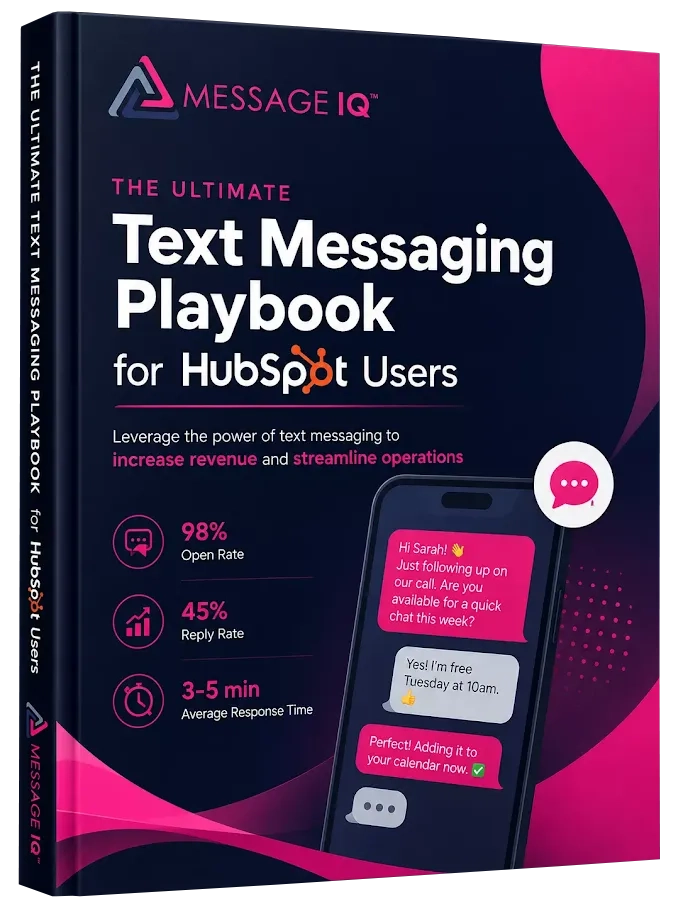
Get Your Ultimate HubSpot Text Messaging Playbook for FREE
Discover how top HubSpot teams use SMS to boost engagement, close deals faster and streamline operations.
Instant download
Expert insights from certified HubSpot professionals
Ultimate Text Messaging Playbook
Implementation model for sales leaders
Create a shared template library and classify each template as either automated-safe, rep-edit required, or fully custom. Set SLA rules for inbound replies and escalation triggers for high-priority contacts.
Review weekly by workflow and rep to identify where automation helps or harms quality.
| Use Case | Automation Level | Personalization Requirement | Primary KPI |
| New inbound lead response | High | Low to medium | First reply speed + response rate |
| Demo confirmation/reminder | High | Low | Attendance rate |
| Post-demo follow-up | Medium | High | Qualified reply rate |
| Proposal nudges | Medium | High | Next-meeting conversion |
| No-show rescue | High | Medium | Rebook rate |
| Close-stage objection handling | Low | Very high | Win-rate influence |
Step-by-Step Implementation
- Map sales conversation types by stage and value.
- Define what is auto-safe vs rep-edit vs manual-only.
- Build template library with approved compliance language.
- Configure routing SLAs for inbound and after-hours replies.
- Train reps on personalization standards and tone consistency.
- Review KPI by workflow weekly and tune split rules monthly.
Practical Checklist
- Direct-answer section present at top of article for answer-engine extraction.
- Question-style headings used for major reader intents.
- Examples and operational details included to improve citation-worthiness.
- At least one comparison/reference table included for skimmability.
- FAQ answers written in concise 1-3 line format for AI retrieval.
- Content includes trust note and practical limitations where relevant.
Frequently Asked Questions
Can fully automated SMS replace rep conversations?
Not for high-intent mid-to-late stage sales interactions. Automation supports speed, but relationship steps still need human context.
What is the best first workflow for sales teams?
Immediate lead-response automation with strong owner routing usually delivers the fastest measurable gain.
How much personalization is enough?
Use enough detail to prove relevance: context, pain point, and clear next step. Avoid generic placeholders.
Should every rep write custom SMS from scratch?
No. Use governed templates plus controlled personalization fields to balance quality and scale.
What KPI should managers watch first?
Qualified reply rate and meeting progression are stronger than raw reply volume.
How do we avoid robotic tone?
Limit over-automation, vary approved templates, and coach reps on conversational clarity.
What happens if reps respond slowly?
Route with SLA and escalation rules so leads are not left idle.
Can this model work for small teams?
Yes. Start with 2-3 automated workflows and one personalization standard, then expand incrementally.
See how much revenue SMS could add to your HubSpot stack
Five inputs. Industry-backed benchmarks. Get your projected annual SMS revenue in under 30 seconds.
Calculate My SMS ROI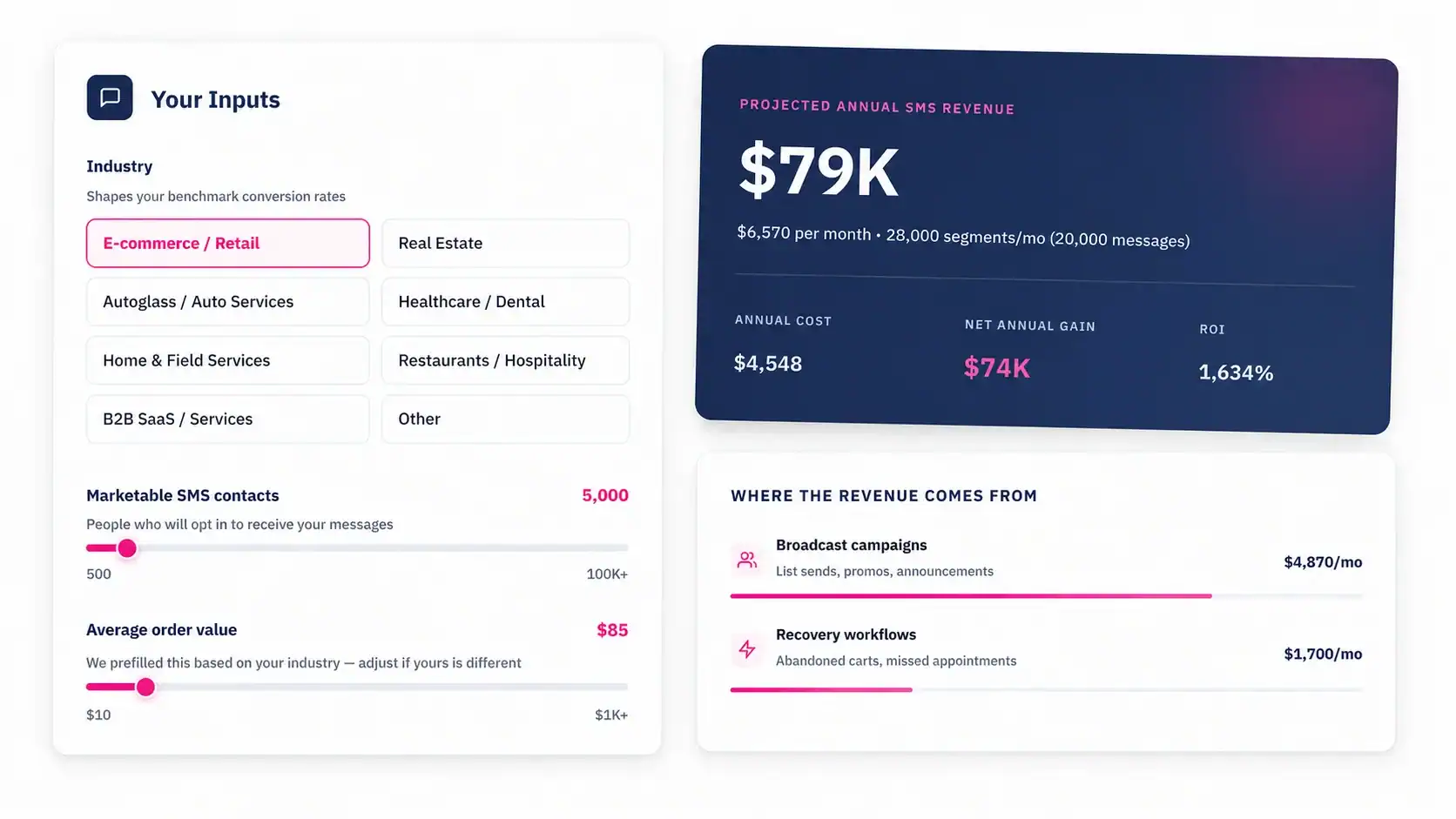
Conclusion
Two-way sales SMS works best when automation handles speed and structure while reps handle context and trust-building. That balance protects conversion quality while still scaling outreach efficiently.