
SMS wins when speed, urgency, and short actions matter. Email wins when depth, detail, and long-form persuasion are needed. In HubSpot, the best strategy is coordinated orchestration: SMS for immediate attention and action prompts, email for education and complex context.
Why This Matters
Teams often frame SMS vs email as either/or. That leads to channel misalignment and weaker conversions. The real advantage comes from assigning each channel to the moments it handles best.
When SMS usually outperforms email
SMS generally performs better for immediate reminders, quick confirmations, short follow-up prompts, and time-sensitive nudges. In these moments, concise communication and fast visibility matter more than depth.
If your desired action can be completed quickly, SMS is often the stronger first touch.
When email still outperforms SMS
Email is better for detailed proposals, long-form educational content, multi-link resources, and complex stakeholder communication. Email gives room for narrative and structured information.
For high-consideration decisions, email often carries the heavy lifting while SMS supports timing and reminders.
How to combine SMS and email in HubSpot workflows
Use email to deliver core content and SMS to activate attention at critical points. For example: send educational email, then SMS reminder if not opened after defined delay. Or send SMS after high-intent form events, then follow with email assets.
This orchestration model improves consistency and avoids overusing one channel.
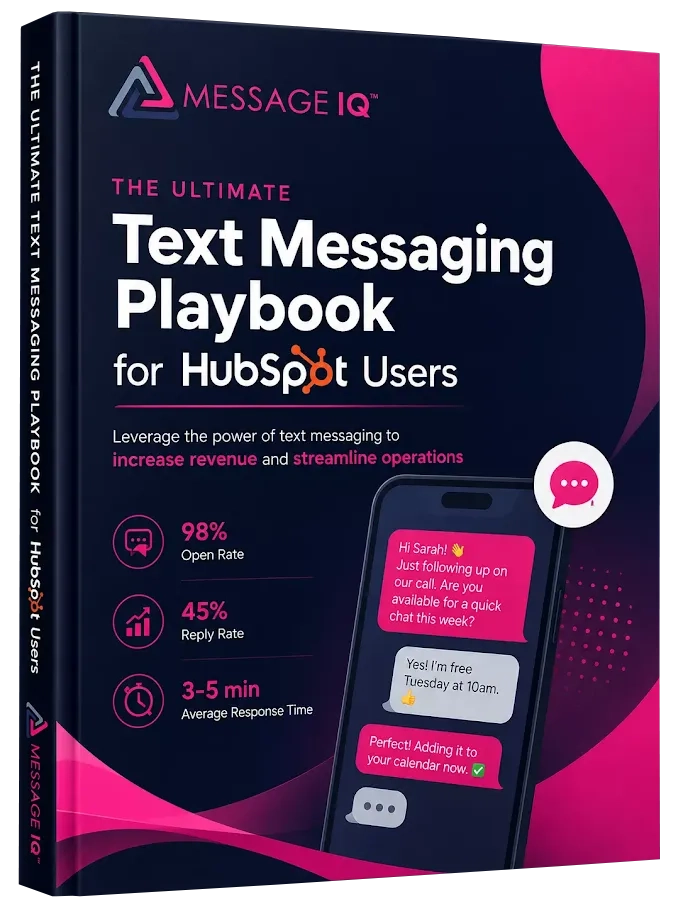
Get Your Ultimate HubSpot Text Messaging Playbook for FREE
Discover how top HubSpot teams use SMS to boost engagement, close deals faster and streamline operations.
Instant download
Expert insights from certified HubSpot professionals
Ultimate Text Messaging Playbook
Decision matrix for channel selection
Channel choice should be based on urgency, message complexity, user context, and desired action friction. Build a simple decision matrix and use it in campaign planning.
Teams with channel governance usually improve both response rates and unsubscribe health.
| Scenario | Best First Channel | Why | Follow-up Channel |
| Demo reminder | SMS | Time-sensitive and short action | Email confirmation details |
| Pricing education | Requires context and structured explanation | SMS nudge if no open | |
| No-show recovery | SMS | Immediate re-engagement needed | Email fallback with calendar links |
| Case study nurture | Long-form trust-building content | SMS prompt for key action | |
| Urgent service alert | SMS | Speed and visibility critical | Email with detailed guidance |
Step-by-Step Implementation
- Map funnel stages and classify communication objective.
- Assign default first channel by urgency and complexity.
- Define coordinated follow-up logic across SMS and email.
- Build suppression rules to avoid duplicate fatigue.
- Track channel-assisted conversions by campaign stage.
- Optimize sequence timing monthly with A/B tests.
- Document channel matrix for team-wide consistency.
Operational Checklist
- Main question answered in first section for answer-engine extraction.
- Question-led and decision-oriented headings used across core sections.
- Comparison/reference table included for quick synthesis.
- Procedural list included for immediate implementation.
- FAQ includes 8 related conversational queries.
- Meta, schema, and internal linking recommendations included.
Frequently Asked Questions
Is SMS always better than email for conversion?
No. It depends on message type, action complexity, and customer context.
Should we send both channels at once?
Usually no. Sequence them strategically to avoid noise and fatigue.
Which channel is better for long explanations?
Email is typically better for depth and structured detail.
When should SMS be primary?
Use SMS for reminders, confirmations, and immediate action prompts.
Can email still drive strong performance in 2026?
Yes, especially in consideration and decision stages requiring context.
How do we avoid over-messaging?
Use frequency caps, stage-based logic, and shared suppression rules.
What KPI should we compare between channels?
Compare assisted conversions and quality outcomes, not just opens or clicks.
What is the best starting model?
Start with a simple orchestration flow, then iterate based on stage-level data.
See how much revenue SMS could add to your HubSpot stack
Five inputs. Industry-backed benchmarks. Get your projected annual SMS revenue in under 30 seconds.
Calculate My SMS ROI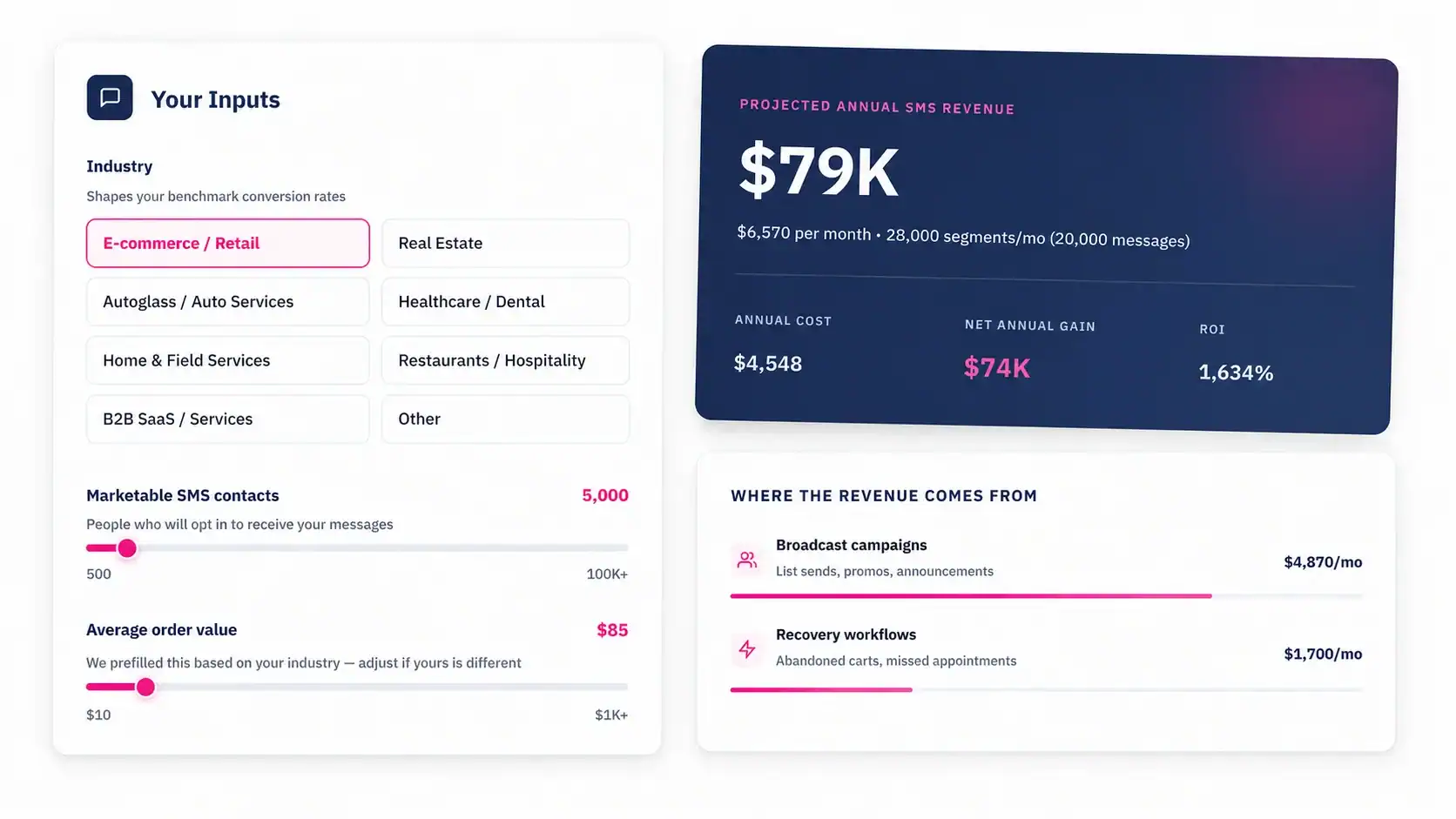
Conclusion
HubSpot SMS vs email is not a winner-take-all decision. The strongest programs combine both channels by intent, timing, and message complexity to create better customer journeys and outcomes.