
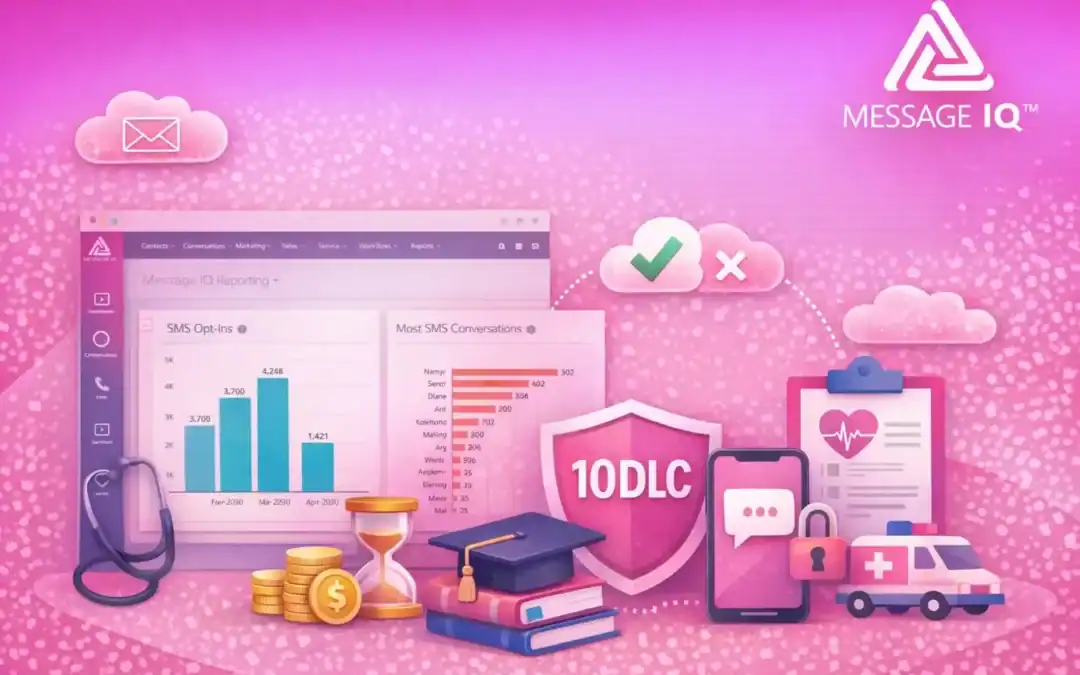
A2P 10DLC registration succeeds when brand details, use-case classification, sample messages, and consent flow evidence are consistent across your application. Most rejections happen because message samples, campaign description, and consent language do not align. Build a pre-submission checklist and review pack before submitting.

HubSpot SMS marketing software. Every text logged to the contact record.
Message IQ runs inside HubSpot, not next to it. Workflows trigger the send, replies land in the timeline, and your team never leaves the CRM.
- Free 15-minute strategy call, live demo inside your CRM
- 300+ SMS templates, instant download
- No pitch, no pressure
Plans from $49/mo. Setup and 10DLC registration handled for you.
Why This Matters
Many teams underestimate A2P registration complexity. Delays here block launch timelines, hurt stakeholder confidence, and can force last-minute changes to campaign plans. A structured submission process usually reduces rework and speeds approval.
What A2P 10DLC registration includes
Registration generally has two major layers: brand registration and campaign/use-case registration. Brand registration establishes the business identity. Campaign registration defines message purpose, audience, and content examples. Approval quality depends on internal consistency across these layers.
If brand profile says one thing while campaign copy and sample messages suggest another, reviewers see risk. Align legal name, website identity, messaging purpose, and opt-in flow artifacts before submission.
Typical timeline and what affects it
Timeline varies by provider and review load, but planning for staged review is safer than expecting immediate approval. Teams that submit complete documentation often move faster than teams that submit quickly with missing detail. The main timeline accelerators are clear use-case definitions, realistic sample messages, and verifiable consent paths.
Set stakeholder expectations early: launch dates should include buffer for corrections and re-submission if needed.
Common fee drivers
Costs can include brand and campaign processing, monthly campaign maintenance, messaging volume, and provider service overhead. The exact stack differs by vendor and traffic profile. High-volume senders or multi-campaign setups may see higher recurring spend than single-use-case programs.
Instead of optimizing only for the lowest registration cost, optimize for approval velocity and long-term deliverability.
Get Your Ultimate HubSpot Text Messaging Playbook for FREE
Discover how top HubSpot teams use SMS to boost engagement, close deals faster and streamline operations.
Instant download
Expert insights from certified HubSpot professionals
Ultimate Text Messaging Playbook
Top rejection reasons and fixes
Rejections commonly come from vague campaign descriptions, inconsistent sample messages, unclear opt-in flows, or prohibited message patterns. Another frequent issue is submitting promotional sample messages for campaigns registered as operational/transactional use cases.
Use a two-person review before submission: one compliance reviewer and one operator who validates practical message behavior against the application narrative.
| Rejection Pattern | Why It Happens | Fix Before Re-Submit | Severity |
| Vague campaign purpose | Description does not match real sending behavior | Rewrite with clear audience, trigger, and value proposition | High |
| Bad sample messages | Samples are generic, misleading, or non-compliant | Provide realistic examples with clear opt-out language | High |
| Consent flow mismatch | Opt-in path in app differs from actual live flow | Document and align live consent capture journey | Critical |
| Mixed use-case signals | Application says transactional but copy is promotional | Separate campaigns by use case and adjust samples | High |
| Brand identity mismatch | Legal/business identity is inconsistent across assets | Standardize business details before submission | Medium |
Step-by-Step Implementation
- Collect brand legal details and verify they match your public web presence.
- Define campaign category/use case in plain language with no ambiguity.
- Write realistic message samples tied to real workflow triggers.
- Prepare consent evidence: form copy, screenshots, and opt-in path notes.
- Run internal pre-flight review using a rejection-risk checklist.
- Submit, monitor status daily, and respond quickly to clarification requests.
- If rejected, map each rejection reason to exact copy/process corrections before re-submitting.
Practical Checklist
- Direct-answer section present at top of article for answer-engine extraction.
- Question-style headings used for major reader intents.
- Examples and operational details included to improve citation-worthiness.
- At least one comparison/reference table included for skimmability.
- FAQ answers written in concise 1-3 line format for AI retrieval.
- Content includes trust note and practical limitations where relevant.
Frequently Asked Questions
How long does A2P 10DLC registration usually take?
It varies, but teams should plan for staged review and potential revision cycles rather than same-day approval.
What causes most campaign rejections?
Misalignment between campaign description, sample messages, and consent flow evidence.
Can we submit generic message examples?
Generic examples increase rejection risk. Use real, scenario-based samples that reflect actual sends.
Do we need separate campaigns for different use cases?
Often yes. Mixing unlike use cases can create compliance and approval friction.
Should marketing own registration alone?
No. Best outcomes come from shared ownership across marketing ops, compliance, and RevOps.
What if our first submission is rejected?
Treat rejection as diagnostic input, correct root issues, and re-submit with full alignment.
Are fees the same across providers?
No. Fee stacks and service components vary, so compare total operating cost, not one line item.
How do we reduce future suspension risk after approval?
Maintain strict consent hygiene, use-case consistency, and ongoing campaign quality monitoring.
See how much revenue SMS could add to your HubSpot stack
Five inputs. Industry-backed benchmarks. Get your projected annual SMS revenue in under 30 seconds.
Calculate My SMS ROI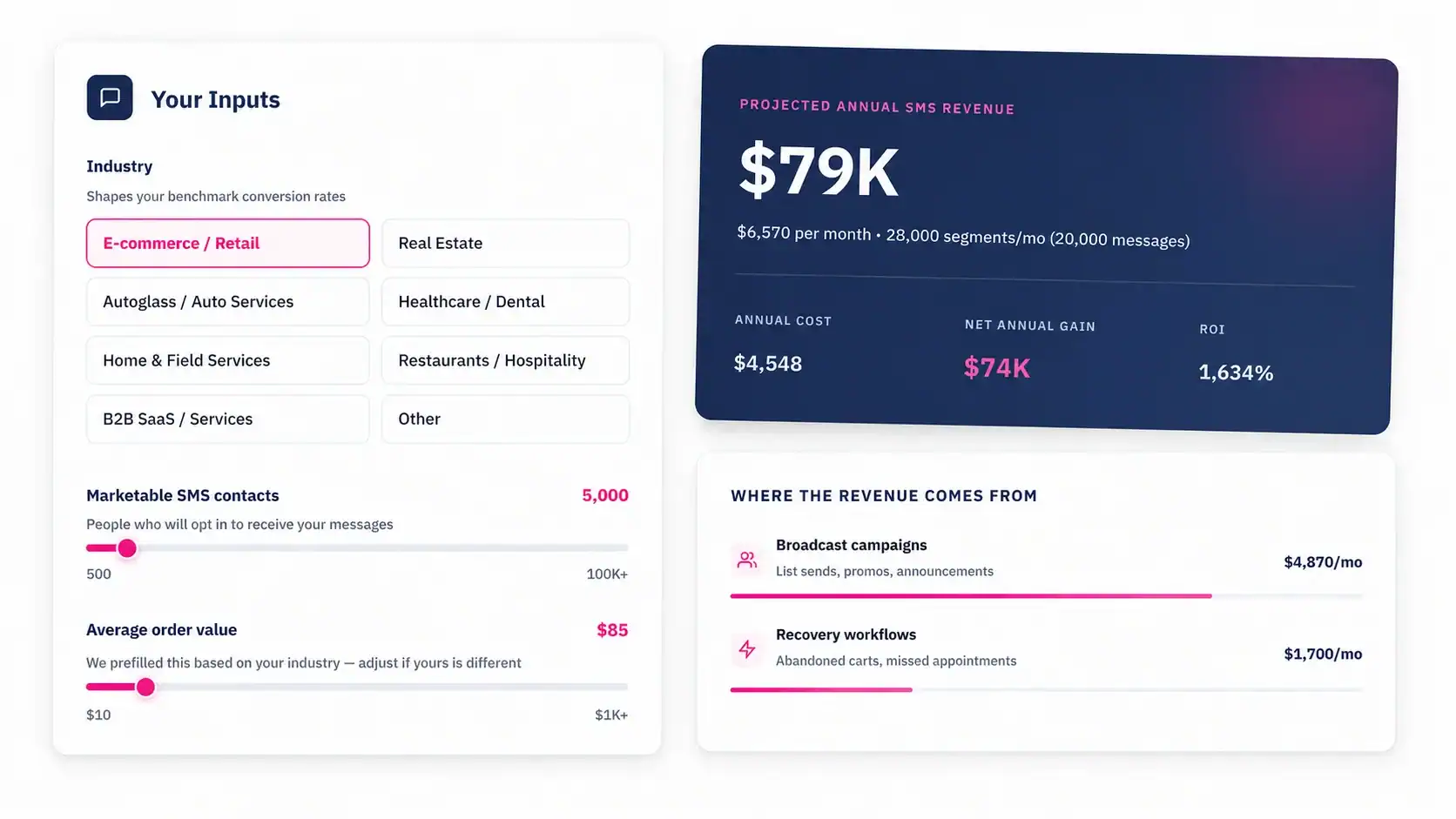
Conclusion
A2P 10DLC success is a process quality outcome. Clean documentation, realistic message samples, and consent alignment reduce rejection risk and protect long-term deliverability after approval.